Ways of Working
The Fix List.
A facilitated session on three questions, and one list your team agrees on: what to fix, in what order, and who owns it.
Who it’s for
For teams with too many problems and no clear place to start.
Everyone can name what’s wrong. Nobody agrees what to fix first. It usually sounds like one of these:
- The same problems keep coming back
- Everyone has a different list of what’s wrong
- Work stalls between people, tools or teams
- Commitments keep slipping
- A new leader, a reorganization or a new mandate, and no shared starting point
- There’s a push to use AI, and no agreement on where
The method
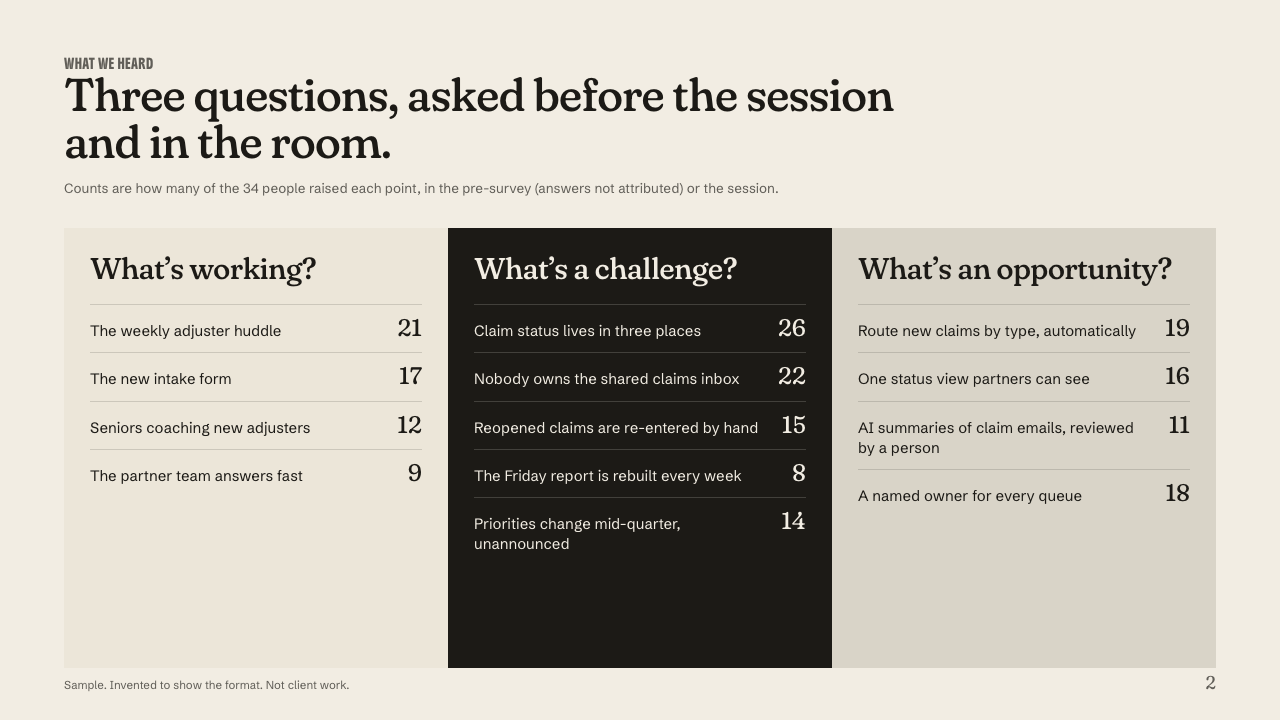
Three questions, asked before the session and in the room.
- What’s working?
- What’s a challenge?
- What’s an opportunity?
Before
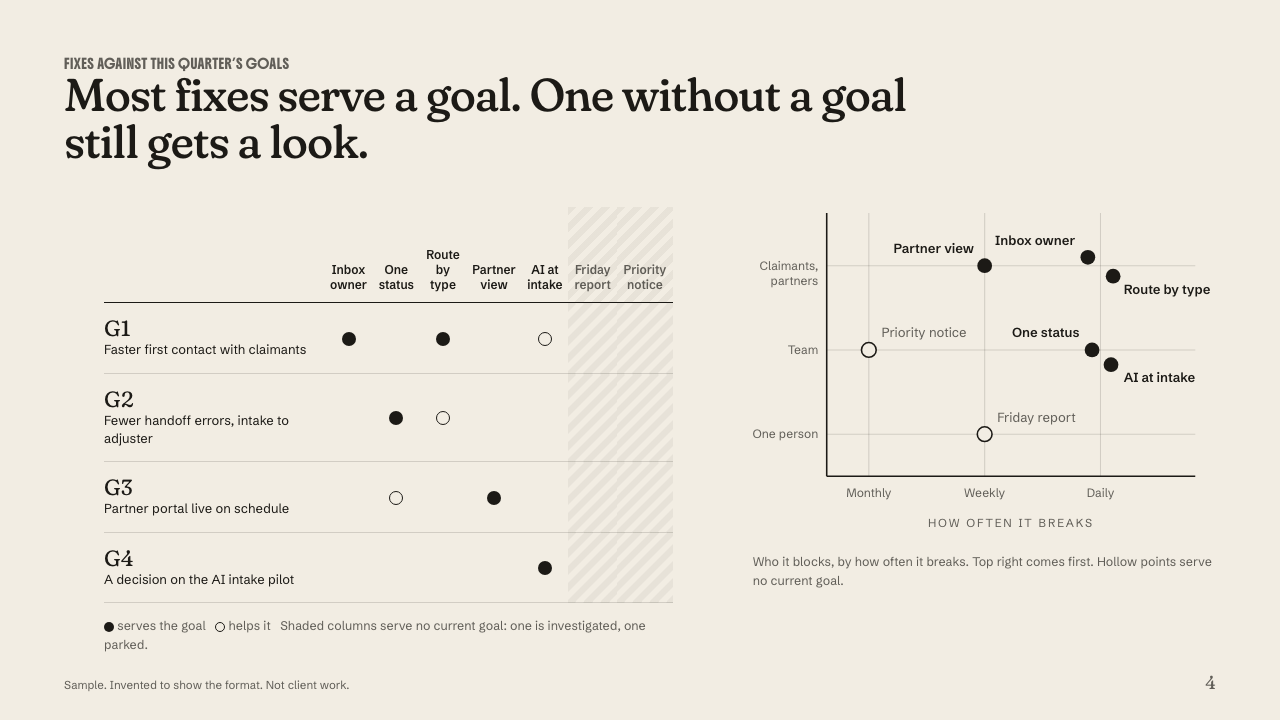
A short survey on the three questions, with answers not attributed to anyone, a few conversations, and a look at the goals or deadlines you’re working to and the tools you use.
In the session
We work through the three questions together, group what comes up, and agree what matters most.
After
I turn it into the Fix List and walk your team through it.
What you leave with
One list your team agrees on.
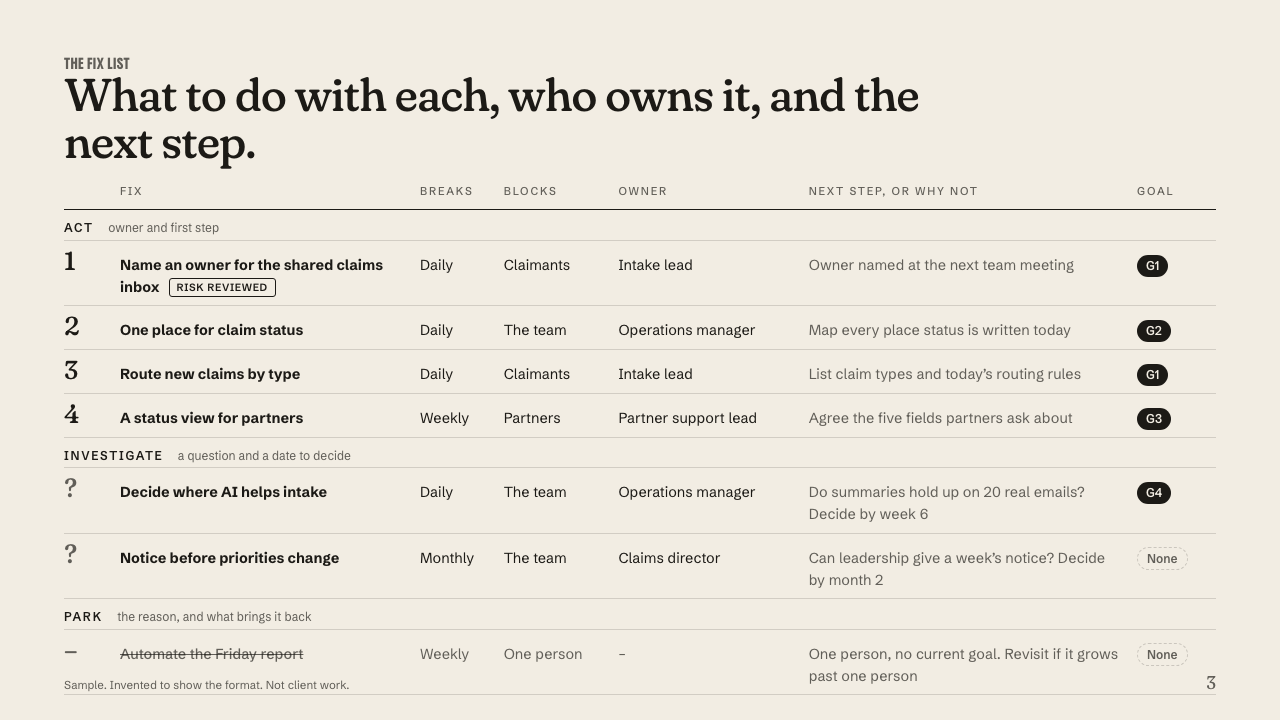
- Every problem in one place, grouped
- A decision on each one: act, investigate or park, with an owner and a reason
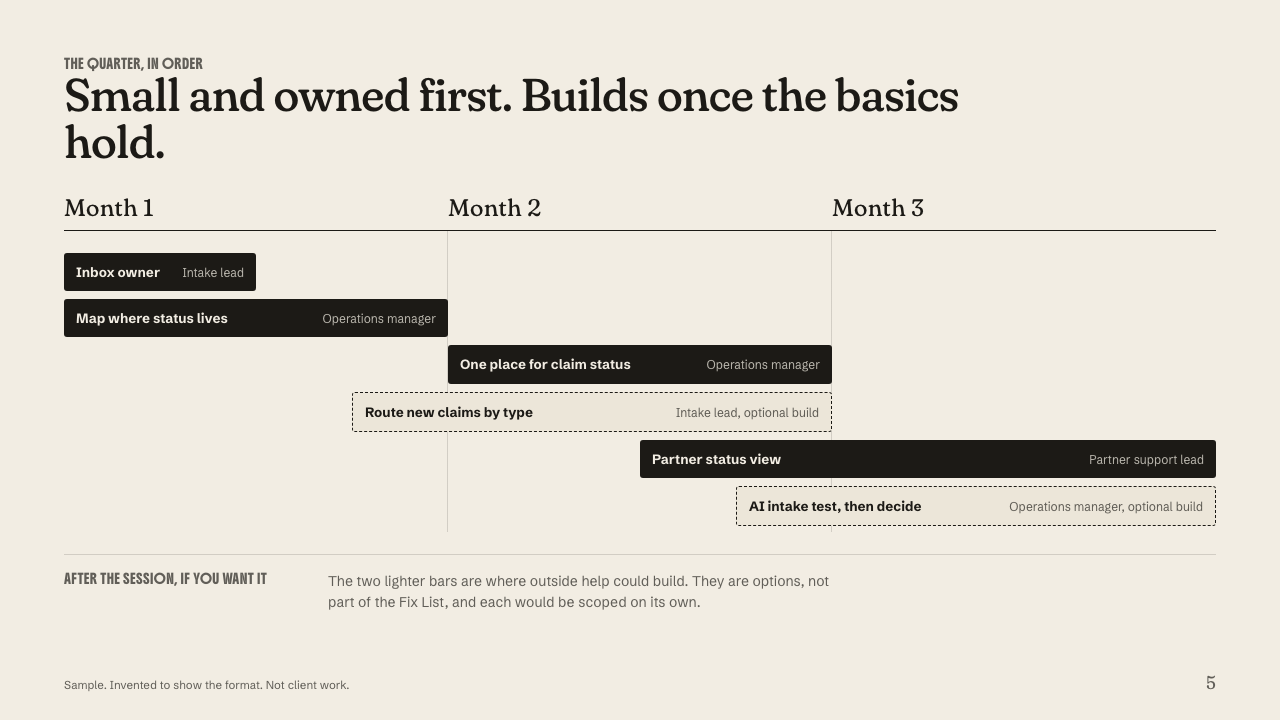
- A roadmap set to how you plan: quarterly goals, project milestones, or the next few weeks of priorities
What can follow
If the list points to something worth building, I can build it, or help you decide how. Scoped separately, and only if you want it.
Where it comes from
I designed and facilitated this format inside a large enterprise.
Tell me what’s getting in the way.
15 minutes. You tell me what’s stuck and what has to get done; I ask who’s involved and what’s been tried. By the end you’ll know whether the Fix List is the right start. If it isn’t, I’ll say so.